

How to Prevent Foamy Beer From Kegs at Home
Last Updated: October 28, 2026
Quick Summary
Foamy beer from a keg is usually caused by CO₂ pressure set too high, beer that is too warm, beer lines that are too short, or residue and kinks in the line. Work through these causes in order, starting with pressure and temperature, and clean the lines regularly.
- Pour two or three glasses in a row to tell first pour foam from persistent foam.
- Check the temperature at the faucet, not just inside the fridge, because a cold fridge can still leave a warm line.
- A longer line gives more resistance, so you can use higher pressure; a shorter line needs lower pressure.
- Clean beer lines every two weeks with warm water and line cleaner, and do a full clean every four weeks.
- Run your hand along the full length of the line to find sharp bends, loops or pinched sections that cause foam.
Table of Contents
- Diagnosing Why Your Keg Beer Is Foamy
- Getting the Keg Beer Temperature Right for Serving
- Balancing CO₂ Pressure With Beer-Line Length
- How to Clean Beer Lines and Check for Kinks and Clogs
- Setting Up Your Draft System So Foam Stays Under Control
- Frequently Asked Questions
Diagnosing Why Your Keg Beer Is Foamy
Foamy beer from a keg is one of the most common problems home bar owners face. Keg Drop is a supplier of pub kegs, craft beers and dispense equipment.
Before changing anything, work out what kind of foam you have: first pour foam and persistent foam have different fixes.
First pour foam or persistent foam
First pour foam shows up only on the first glass after a break. Beer sat in the line overnight or between sessions, warmed slightly, and the first pour pushes foam through the faucet. Once the line clears, the beer pours normally.
Persistent foam shows up on every pour and usually points to a problem with pressure, temperature, or the line itself.
Quick test: pour two or three glasses in a row. If the foam drops off after the first, you have first pour foam. If it stays, look closer at pressure and temperature.
Common causes of excessive foam
Most foamy beer comes down to one of these causes:
- CO₂ pressure set too high for the beer temperature
- Beer too warm when it reaches the faucet
- Beer lines too short to balance the pressure
- Kinks, clogs, or residue in the beer line
- Damaged or loose connections at the keg coupler or faucet
- Beer disturbed by rough handling or shaking before serving
Work through this list in order. Pressure and temperature cause the most problems, so start there.
Getting the Keg Beer Temperature Right for Serving
Temperature controls how much CO₂ stays dissolved. Cold beer holds more gas; warm beer lets gas escape as foam the moment it leaves the keg.
Check the temperature at the faucet, not just inside the fridge, a cold fridge can still leave a warm line.
Keep these points in mind:
- Store the keg in a cold room or a dedicated kegerator
- Keep the beer line cold along its full length
- Avoid moving the keg while it is connected to a warm area
- Let the keg rest after transport before you tap it
Watch out: a keg that sat in a warm car or delivery van can foam for hours even after it cools down. Give it time to settle before serving.
Balancing CO₂ Pressure With Beer-Line Length
Pressure and line length work together. CO₂ pushes beer through the line, and the line's length and width create resistance that slows the flow. When the two are balanced, the beer pours smoothly; when they are not, you get foam.
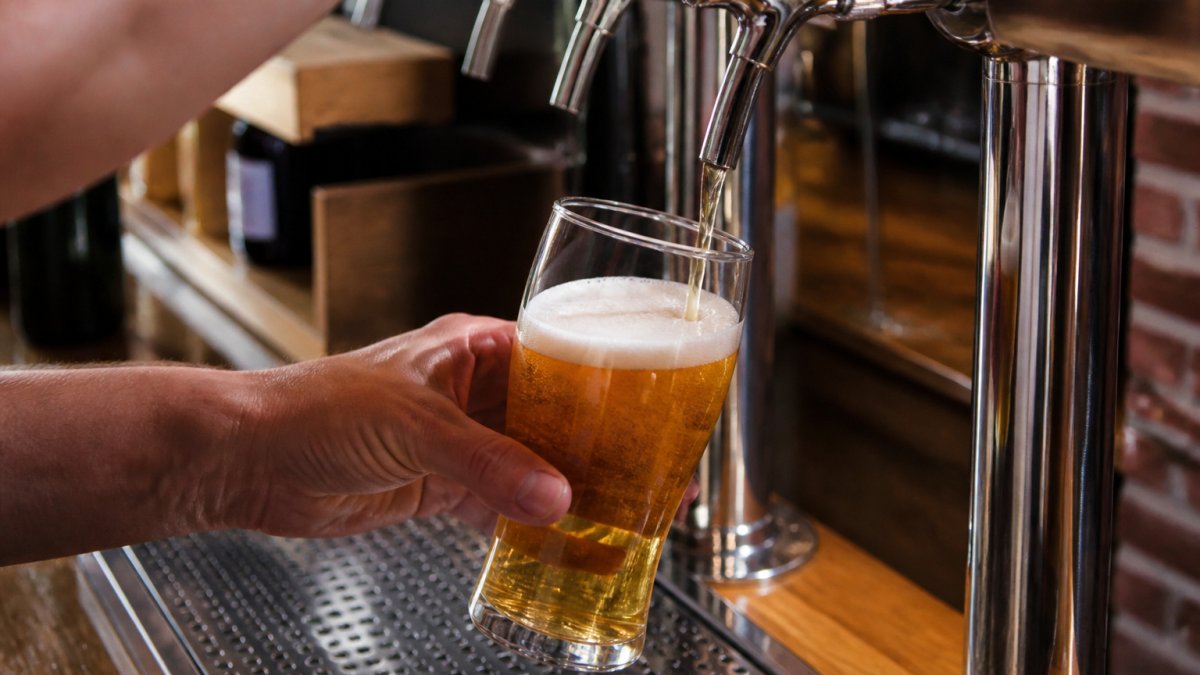
A simple rule: a longer line gives more resistance, so you can use higher pressure; a shorter line needs lower pressure.
Micro Matic Flow Control Valve 3/8″ X 5/16″ →
The balancing calculation in practice
Draft-system balancing is not guesswork: the pressure you set at the regulator must be offset by resistance in the line, tap and any elevation change. A common method:
- Decide the carbonation level you want for the beer style (see the chart below).
- Find the pressure that holds that carbonation at your serving temperature.
- Add up the resistance in the system: line length, line diameter, tap height and any restrictor.
- Adjust line length or pressure until the two sides match.
Worked example for a common home setup
If your line is only 1.5 m, the system is under-resisted and the beer will foam even at the correct pressure: lengthen the line to about 3 m or fit a flow control valve. If your line is 5 m, the pour may be slow and flat; shorten it or raise pressure slightly and retest.
Temperature-and-pressure reference chart
| Serving temperature | Light carbonation (lagers, ~2.4 vols) | Standard ale (~2.2 vols) | Low carbonation (stouts, ~1.8 vols) |
|---|---|---|---|
| 3°C | 1.1-1.3 bar | 0.9-1.1 bar | 0.7-0.9 bar |
| 4°C | 1.0-1.2 bar | 0.8-1.0 bar | 0.6-0.8 bar |
| 6°C | 0.8-1.0 bar | 0.7-0.9 bar | 0.5-0.7 bar |
| 8°C | 0.7-0.9 bar | 0.6-0.8 bar | 0.4-0.6 bar |
Checking serving pressure and adjusting in small steps
If the line is short, a flow control valve can help. The Micro Matic Flow Control Valve 3/8″ X 5/16″ (£15.00) lets you adjust flow by turning the barrel, then lock the setting with a sliding sleeve. It fits a John Guest 3/8″ inlet and outlet. You can also find a New Beer Gas Cylinder (£145.00).


How to Clean Beer Lines and Check for Kinks and Clogs
Dirty lines cause foam: residue, mould and yeast build up inside the line and create rough spots where bubbles form. Browse line cleaning products to find a suitable cleaner for your system. A kink or partial clog restricts flow and pushes the system out of balance.
A preventive cleaning schedule
Cleaning is not a one-off job. A simple schedule keeps foam from returning:
- Every pour session: draw a small glass and check for clarity and smell before serving.
- Every two weeks: flush the line with warm water and a line cleaner if the system is in regular home use.
- Every four weeks: full clean with a dedicated beer line cleaner, including the faucet and coupler.
- Every three months: deep clean and inspect the full line, replacing any soft or discoloured sections.
- After any keg change: flush the line before connecting the new keg.
Busier pub-style lines may need weekly cleaning. If you notice a sour smell, cloudy beer or a slow pour, clean immediately.
Signs of buildup inside the line
You do not need to cut the line open to spot trouble. Watch for:
- A white or brown film visible through clear line
- Beer that tastes sour, cardboard-like or flat
- Foam that appears in the middle of the pour rather than at the start
- A pour that slows down over a few days
- Small bubbles clinging to the inside of the line between pours
Any of these means residue is restricting flow and creating nucleation points for foam. Clean and inspect the line before changing pressure or temperature.
Step-by-step clean and inspection
The 5l Purple Beer Line Cleaner is one option for this job. Use it as directed on the label, and rinse the line well afterwards.
Checking for kinks, clogs and restrictions
Run your hand along the full length of the line. Look for sharp bends, loops dipping below the keg, or sections pinched behind equipment, a kink acts like a partial valve and causes foam even when pressure and temperature are correct. Check the faucet spout for scale or hop residue. If the pour improves after cleaning but foam returns within days, the clog is likely further back in the line or coupler.
Setting Up Your Draft System So Foam Stays Under Control
If your foam keeps coming back after you have checked pressure, temperature, and the line, visit the Keg Drop shop to compare equipment and find the right parts for your setup.
Frequently Asked Questions
How do I keep keg beer from foaming?
Keep the keg and beer lines cold, set CO₂ pressure to suit the beer's serving temperature, and make sure the beer line is long enough to slow the flow. Pour at a 45-degree angle into a cold glass and clean the lines on a regular schedule. If foam persists after you have checked these, adjust one variable at a time, wait a day, and retest. Changing several settings at once makes it hard to tell which change helped.
What temperature should a keg be to prevent foaming?
Most ales and lagers are served cold, and the keg should be kept at a steady temperature that suits the style you are pouring. A keg that is too warm will release carbonation as foam, while one that is too cold can pour slowly. Check the temperature with a thermometer rather than guessing, and make sure the keg and lines sit at the same temperature. Let the keg settle for a day after moving it before you judge the pour.
Can a dirty beer line cause foamy beer?
Yes. Residue and mould inside a beer line can roughen the inner surface, creating turbulence that releases CO₂ and produces foam. A dirty line can also restrict flow unevenly. Cleaning the line with a suitable beer line cleaner, rinsing thoroughly, and checking for kinks or clogs often fixes the problem. If the foam returns soon after cleaning, check the line length and serving pressure next.
Should you release pressure from a foamy keg?
Releasing pressure can help if the keg is over-carbonated, but it is a temporary fix. Lower the regulator setting in small steps, then let the beer rest and retest before making further changes. Do not vent the keg repeatedly, because this can drive off carbonation and leave the beer flat. If the keg was left warm or jolted during transport, let it settle in a cold place for a day before judging whether the foam persists.
